Eat Sleep Football Repeat: Sublimation Design Review
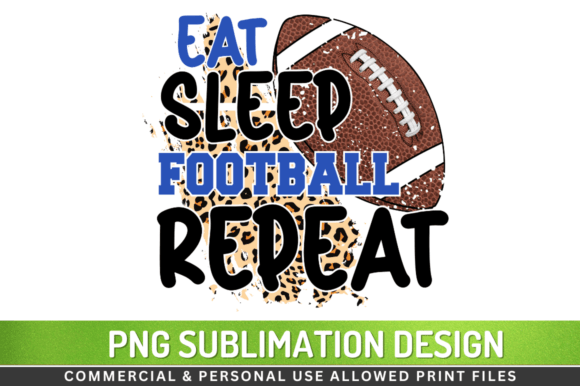
As a designer who bridges the gap between digital graphics and tactile needlework, I approach every new asset with a specific question: how will this actually translate to thread? When evaluating the Eat Sleep Football Repeat Sublimation De, my first impression is that this graphic possesses the bold, rhythmic clarity necessary for successful textile application. While marketed primarily as a sublimation PNG for print-on-demand services, the visual hierarchy of this design makes it a compelling candidate for adaptation into a machine embroidery design. The layout relies on strong typography and iconic imagery rather than subtle gradients, which is exactly what we look for when planning a sweatshirt embroidery project or a custom tote bag design.
In the world of Crafts and Graphics, versatility is currency. For Etsy sellers and small shop product creators, having a design that works across multiple mediums increases ROI. This specific "Eat Sleep Football Repeat" motif captures a lifestyle mood that resonates deeply with sports families. However, moving from a flat PNG to a stitched finished product requires careful translation. Below, I break down how this design performs in real-world scenarios, where it shines, and where you need to exercise caution before hooping up your fabric.
Translating Bold Graphics to Stitched Reality
The strength of the Eat Sleep Football Repeat Sublimation De lies in its repetitive, mantra-like structure. Visually, this creates natural segmentation. For an embroidery project, this segmentation is gold. It allows us to break the design down into manageable sections without losing the overall impact. When I visualize this on a custom apparel piece like a heavyweight hoodie, I see the text elements working beautifully as column satin stitch lettering, while the football iconography serves as perfect anchor points for fill stitch or even an applique design.
I recently consulted on a line of game-day gear for a local youth league booster club. They wanted merchandise that felt boutique rather than generic. We considered using this exact aesthetic for a personalized gift set including caps and towels. Because the design uses high-contrast elements, it maintains legibility even when scaled down for a left-chest logo on a polo or enlarged for a back-of-hoodie statement. The "repeat" aspect of the phrase lends itself to vertical stacking, which fits perfectly within standard 4x4 or 5x7 hoop size constraints often used in commercial embroidery. Unlike complex scenic designs that lose definition when resized, this typographic-led graphic retains its personality across various dimensions.
Real-World Application: The Game-Day Tote Test
To truly judge the viability of this asset, let’s walk through a practical scenario involving a tote bag design. Canvas totes are staples for any craft business targeting sports moms. If I were producing this item using the Eat Sleep Football Repeat Sublimation De as my reference, I would prioritize texture contrast. The smooth, digital nature of the PNG needs to be reimagined with dimensional thread to justify the price point of a handmade product.
For the word "Football," I would recommend a textured fill stitch to mimic the pebbled leather of a real ball, rather than a flat print. The words "Eat," "Sleep," and "Repeat" should be executed in a dense satin column to create a raised, premium feel against the matte canvas. This interplay of textures elevates the design from a simple slogan to a piece of wearable art. Furthermore, because this is originally a sublimation file, the color palette is likely vibrant. In embroidery, we must map these colors to physical thread colors carefully. Neon greens or bright whites that pop on screen can sometimes look cheap in thread if the sheen isn't right. Testing on scrap canvas is non-negotiable here to ensure the stitch density provides enough coverage without causing puckering on the unstructured bag material.
Navigating Fabric Limitations and Technical Constraints
While the Eat Sleep Football Repeat Sublimation De is visually adaptable, not every substrate is a safe bet. As experienced makers know, a great digital embroidery file concept can fail miserably on the wrong fabric. Here is where you need to be strategic:
- Stretchy Performance Fabrics: Football themes often lead us toward polyester jerseys or moisture-wicking tees. These are notoriously difficult for embroidery. If adapting this PNG for performance wear, you must use a heavy cutaway stabilizer and potentially reduce the stitch density to prevent the fabric from becoming bulletproof or distorting the circular shape of the football elements.
- Textured Towels and Fleece: For holiday embroidery on plush blankets or terry cloth towels, the fine details of any accompanying icons might get lost. You may need to add a knockdown stitch layer beneath the design or simplify the artwork derived from the PNG to ensure the message remains readable.
- Curved Surfaces: If applying this to a structured cap, the vertical stacking of "Eat Sleep Football Repeat" works better than a horizontal layout. However, verify that your digitizing software can curve the text to match the hat's profile; otherwise, the straight lines of the original graphic will look warped and unprofessional on the finished embroidered patch or cap front.
- Dark Fabrics: Since this is a sublimation-first design, it may rely on white ink for contrast. Sublimation doesn't print white. In embroidery, we have the advantage of white thread. Ensure your adaptation includes adequate underlay stitches so that light-colored letters remain crisp on navy or black sweatshirts without the dark fabric bleeding through.
Professional Notes for Sellers and Makers
Before you list a product featuring this design on Etsy or at a craft fair, there are critical due diligence steps to take. First and foremost, confirm the licensing. The description states "JUST DOWNLOAD AND PRINT YOUR OWN" and mentions print-on-demand compatibility, but it does not explicitly grant rights for commercial embroidery or digitized resale. Always verify whether you can sell the physical stitched items or if the license is restricted to printed goods only. Protecting your craft business from copyright issues is just as important as stitch quality.
From a production standpoint, never trust a printable mockup alone. A digital preview cannot show you how the running stitch outlines interact with the weave of a linen tea towel versus a polyester blend. Create a physical sample. Check the back of the embroidery; excessive jump stitches or bobbin thread showing on top indicates that the auto-digitizing settings need adjustment. For baby embroidery items, which this theme suits well for little athletes, ensure the back is smooth or covered with a soft fusible backing to protect sensitive skin.
Finally, consider the value proposition. Customers can buy a printed shirt anywhere. They come to small shop product vendors for the tangible quality of stitching. Use the Eat Sleep Football Repeat Sublimation De as a blueprint, not a final destination. Add personalized names below the main graphic using a complementary font. Mix media by combining the embroidered text with a sublimated background pattern if you have both capabilities. This hybrid approach maximizes the utility of your design assets and offers a unique personalized gift that stands out in a saturated market.
Ultimately, this design has excellent bones for fiber arts. Its bold simplicity respects the limitations of thread while celebrating the spirit of the sport. Whether you are creating team gifts, boutique inventory, or family keepsakes, treating this PNG as a starting point for thoughtful digitization will yield professional, sellable results. Just remember to test, verify licenses, and let the texture of the thread enhance the graphic's inherent energy.